A pleasure, as always, to wander through the NGV International collection displays after seeing Jenn Kidwell and the blackening’s Welcome to Collect: A Flirtation, with Capitalism at Melbourne Arts Centre as part of RISING festival 2026.

A pleasure, as always, to wander through the NGV International collection displays after seeing Jenn Kidwell and the blackening’s Welcome to Collect: A Flirtation, with Capitalism at Melbourne Arts Centre as part of RISING festival 2026.
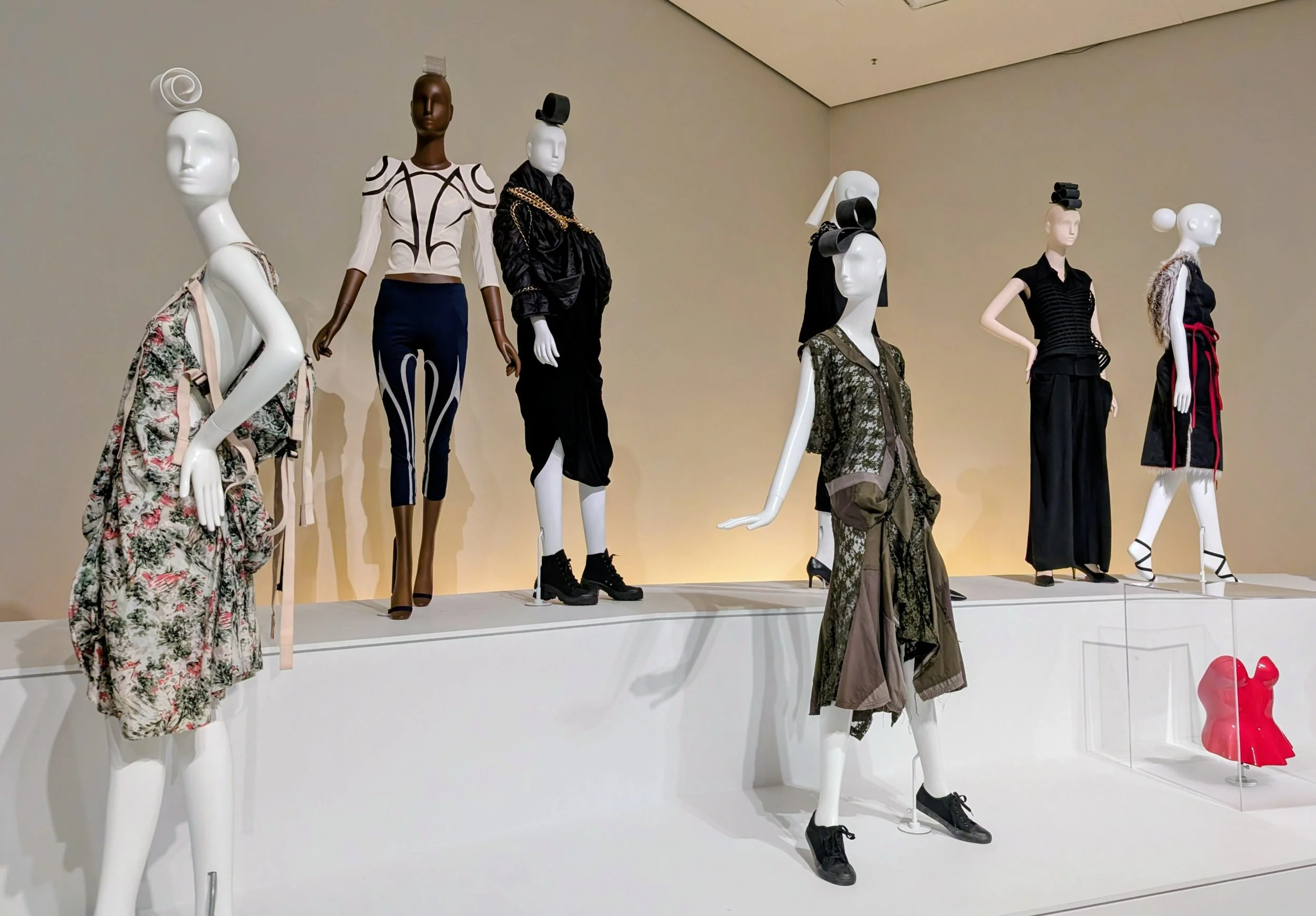
From wall text: ‘Since the late 1970s Japanese designers have had a significant impact on global fashion practice. Individually and collectively, their work has redefined fashion conventions through groundbreaking approaches to reinterpreting tradition, materials, construction and the relationship between body and dress.
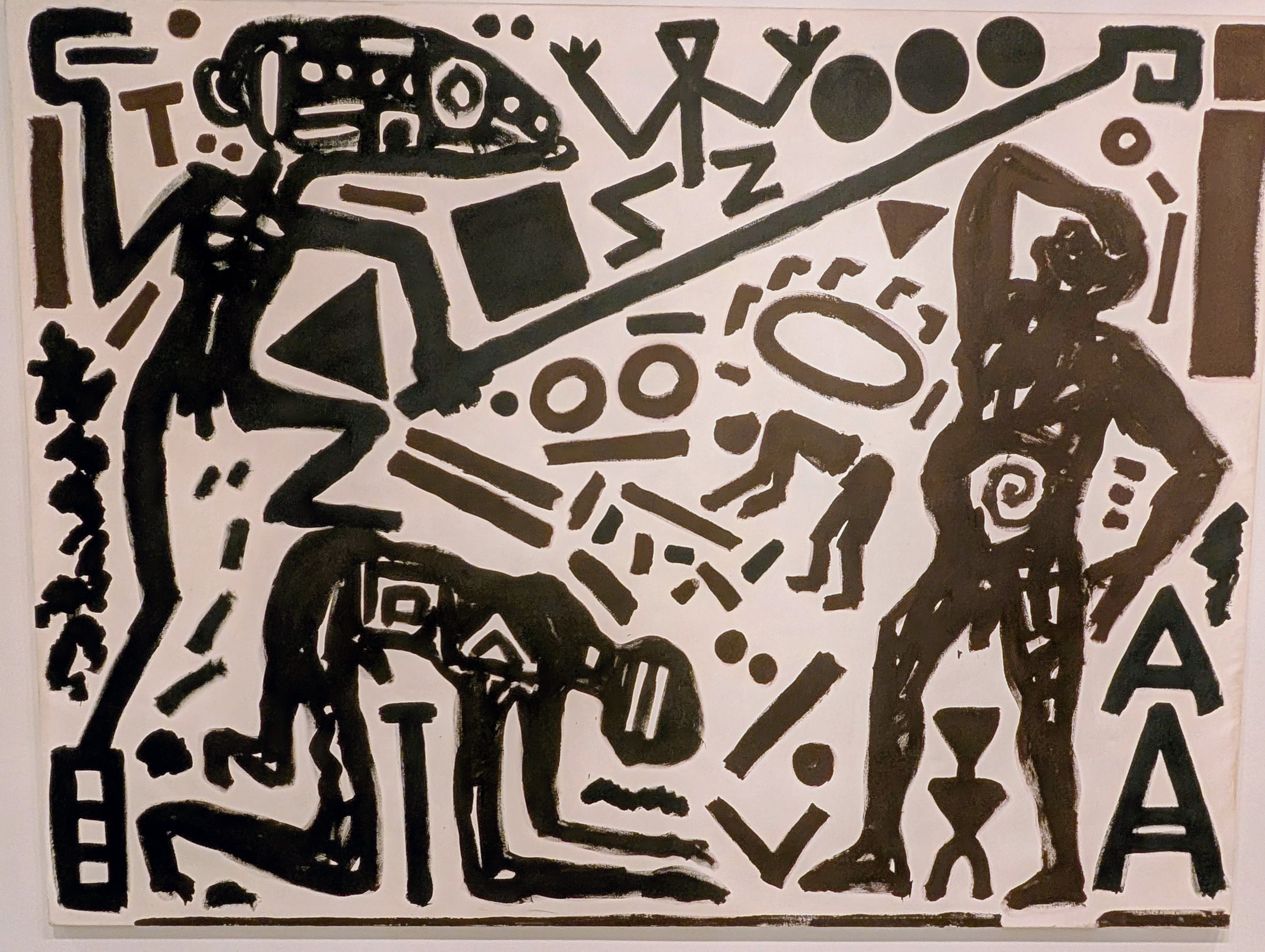
Wechseinm verwechseln [To change, to confound]
1983
synthetic polymer paint on canvas
From wall label: ‘Ralf Winkler's adoption of the name A. R. Penck on the occasion of his first exhibition in West Germany in 1969 signalled his deliberate attempt to work against an aesthetic identifiable by either name or style. Penck lived under the East German Communist system until 1980, unable to visit the exhibitions of his work occurring in the West or to display his art in the country of his birth. To change, to confound, reflects the psychological effects of postwar German society, exploiting the graphic potential of black and white and the raw strength of the artist's totemic figures to investigate unequal power structures and highlight the possible aggression that can exist between people.’
Relaxation
Amidst the clouds
c. 1940s
gelatin silver photograph
From wall label: ‘Chin-San Long was a pioneering photographer, recognised as one of China's first photojournalists and for his innovative artistic photography, such as his unique 'composite photography' that combined multiple photographs to create landscapes reminiscent of traditional brush-and-ink paintings. Long worked in Shanghai during the 1920s and 1930s before relocating to Sichuan province during the Pacific War. He moved to Taiwan in 1949 to escape the communist takeover of mainland China. He died on 13 April 1995 in Taipei at the age of 102.’
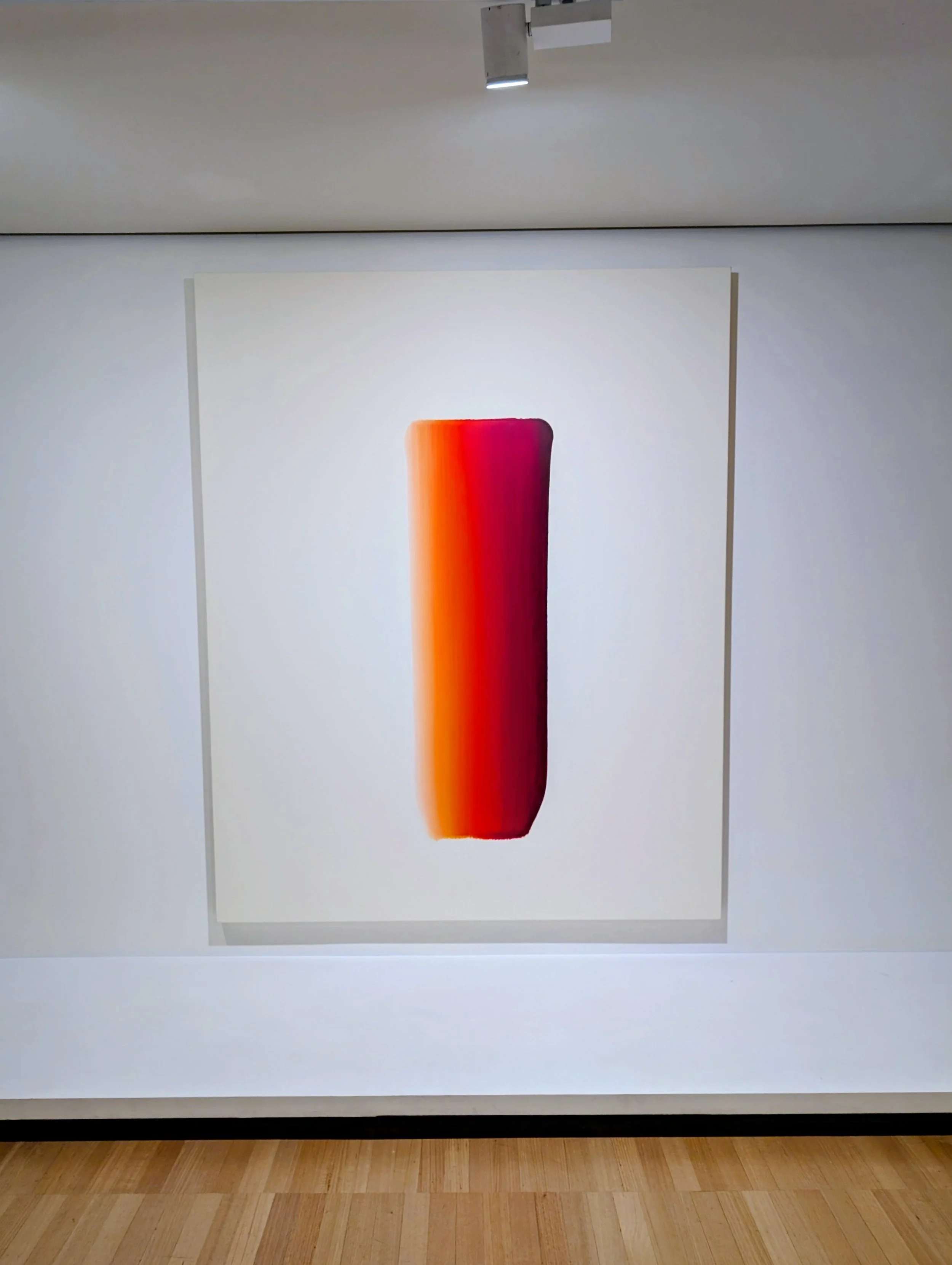
Dialogue
2017
oil on canvas
From wall label: 'Born in Kyongsan-namdo, Korea, Lee Ufan emerged in the late 1960s as a major proponent of the avant-garde Mono-ha (Object School) group, Japan's first contemporary art movement to gain international recognition. He follows the Zen Buddhist practice of painting brushstrokes in a form of meditation representing energy and realisation. Produced by inhaling and painting a single brushstroke with each breath, the single stroke and its power to represent everything, and yet nothing, has been central theme in Lee's career since his first solo exhibition in Tokyo in 1967.
Lee's Dialogue series consists of what appears to be a huge single brushstroke. However, when viewed up close, it becomes evident it is not one single stroke but many thin brushstrokes, each painted numerous times against each other. Like Zen philosophy, this process embodies the universe and the void - a representation.’