Art Gallery of South Australia, Samstag Museum of Art, Adelaide Botanic Gardens | Curated by Ellie Buttrose
Popped down to Adelaide to catch the final weekend of the Adelaide Biennial. I think what I appreciated most was the way that artists and their works were dispersed between venues, rather than presented monographically, as is the norm. It allowed for artworks to be in conversation with a much greater diversity of ideas, and created a sense of call and response across and within venues, that invited contemplation. A wonderfully generous and kind edition - even if dealing with difficult matters - to the art and artists, and importantly to the audience.
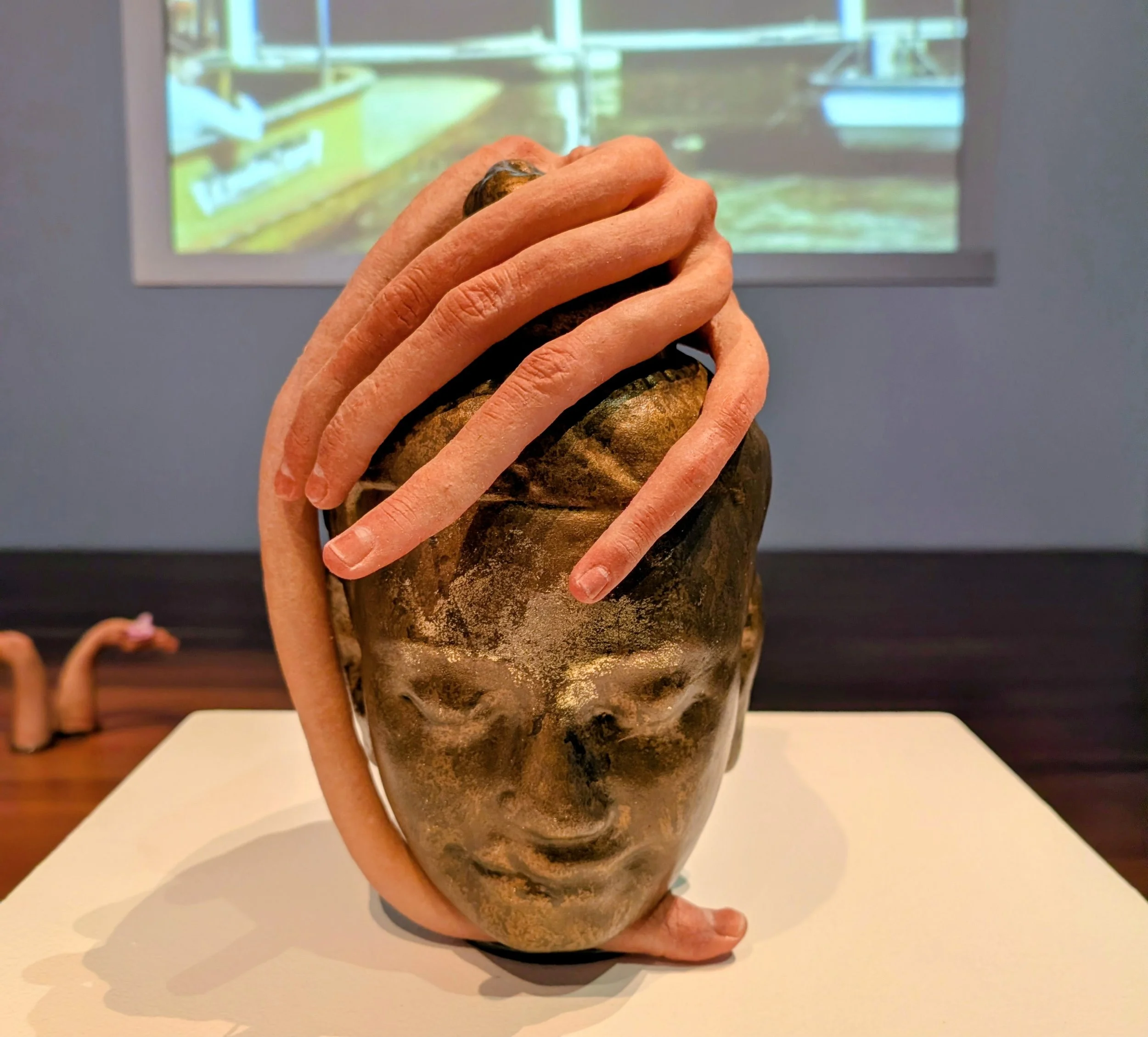
Nathan Beard
Cicerone
2025
single-channel video, silicone, oil, pigment, polyactic acid, steel, foam, resin, found objects
From the wall label: ‘The word 'cicerone' refers to a guide who facilitates interpretive experiences for sightseers and gallery visitors. Nathan Beard uses the expression to suggest the subjective lens through which culture is understood, and, more pointedly, to invoke guides who do not belong to the cultures they are interpreting. Cicerone includes a single-channel video, collated from feature films, documentaries and television series, and references the circulation and consumption of Thai culture. Into this mix Beard has spliced Super 8 film from his mother's archive. The intimate familial footage interrupts the commercial gaze. The 3D-printed Buddha sculptures in Cicerone, copies of sixteenth-century bronzes in the Art Gallery of South Australia collection, are cradled by rubbery forms cast from the artist's hands to propose a digitally facilitated symbolic restitution.’
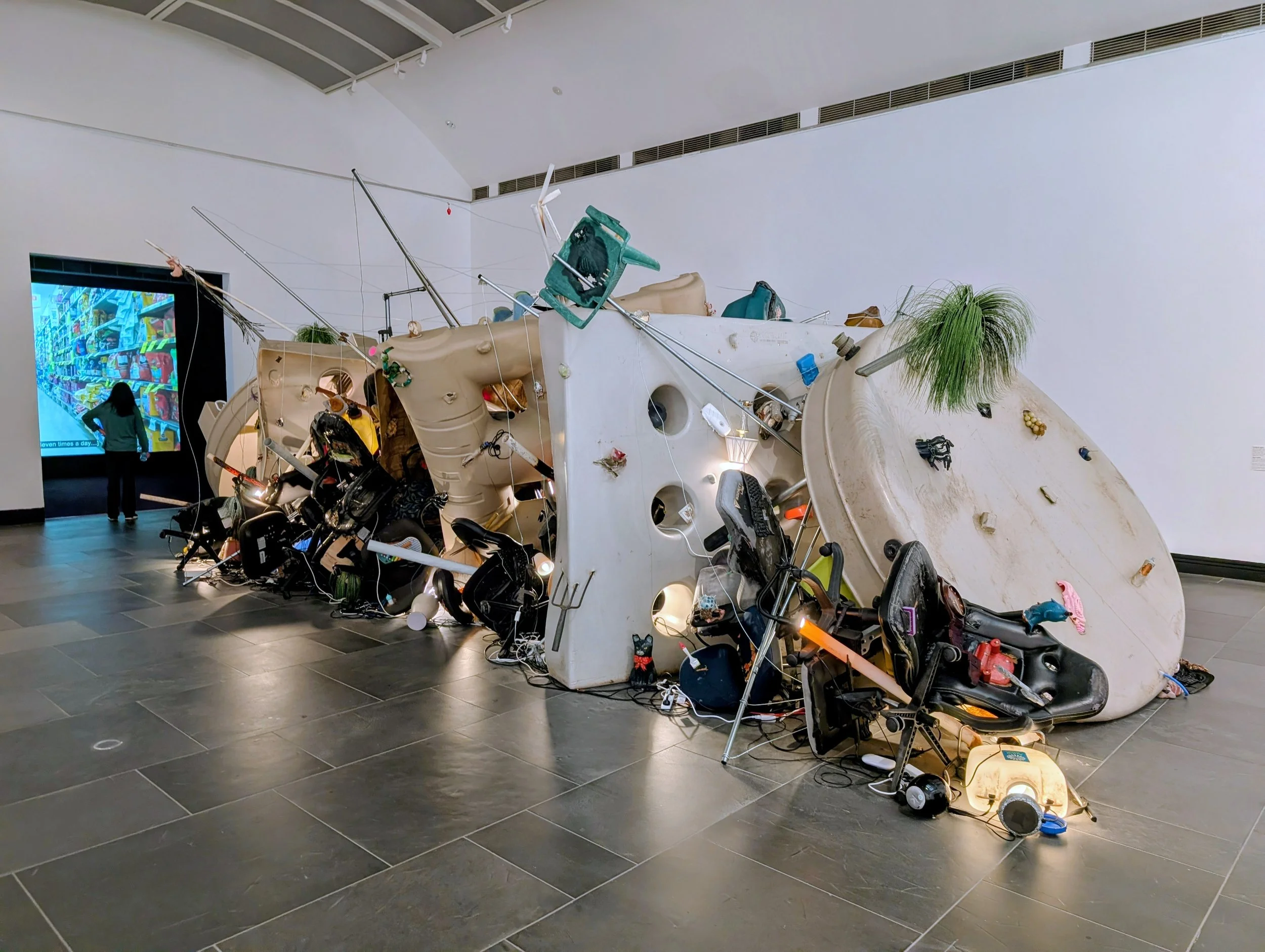
Erika Scott
Necrorealist Sunscreen
2026
mixed media
From the wall label: ‘The term 'necrorealist' in Erika Scott's work of art title refers to both a 1980s Soviet film and art movement, in which dark humour and absurdity were used to examine grotesque aspects of life and death. Necrorealist Sunscreen makes is clear that, with the loss of crafted objects and the onslaught of mass-produced disposable items, the next generation will not inherit heirlooms; rather, they will be bequeathed plastic in varying states of decay. Nostalgic household items showing signs of wear and tear are swept up and tangled with centrifugal force. The combination of computer chairs and water tanks hints at the vast amount of natural resources consumed by machine learning and data storage systems, adding an overwhelming sense of environmental horror to the installation.’
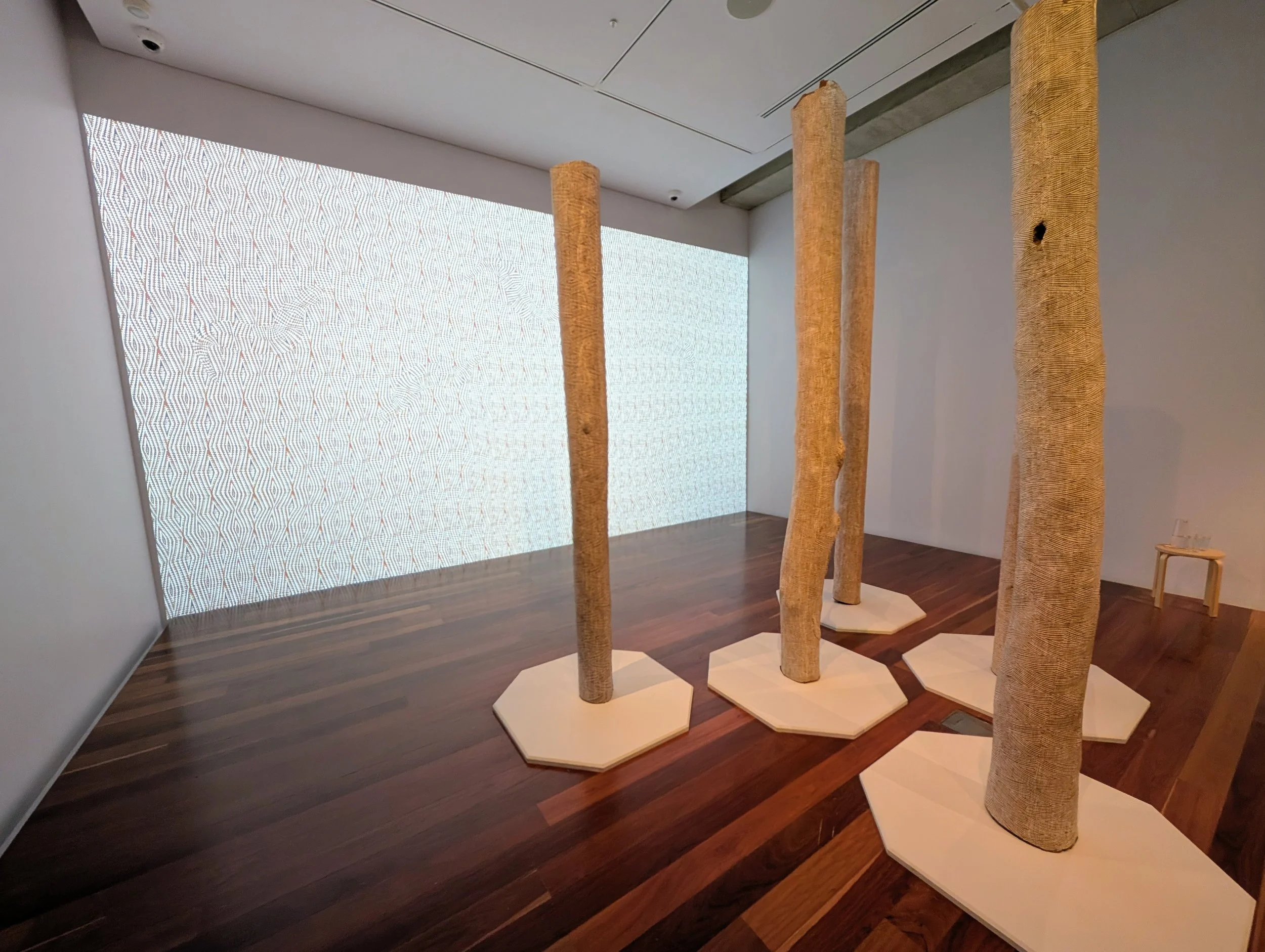
Milminyina Dhamarrandji
Dhambadiny
2023-25
natural pigments on eucalyptus, video projection
From the wall label: ‘The way the dhambadiny (death adder) camouflages itself in the sand and grass to evade detection is expertly conveyed in Milminyina Dhamarrandji's visually confounding works of art. At times it is difficult to discern with clarity the serpentine forms on the painted hollow-log sculptures and animated video due to the dazzling visual effect of the concentric diamond motif of the Djambarrpuynu miny'tji (sacred clan design), which takes its form from the snake's patterned skin. With each application of the paint brush, Dhamarrandii reiterates her commitment to her totem, ancestors and Country.
‘With paint, carving and animation, Dhamarrandji enlivens the ceremony for the dhambadiny, darrpa (king bronw snake), and wuwarku (taipan) which takes place on the Ruwak area of Dhambaliya (Bremmer Island). Following the ceremony, the bapi (snakes)move to Rirrawutha, on the edge of the island, to rinse their teeth in the ocean as part of their spiritual cleansing.’
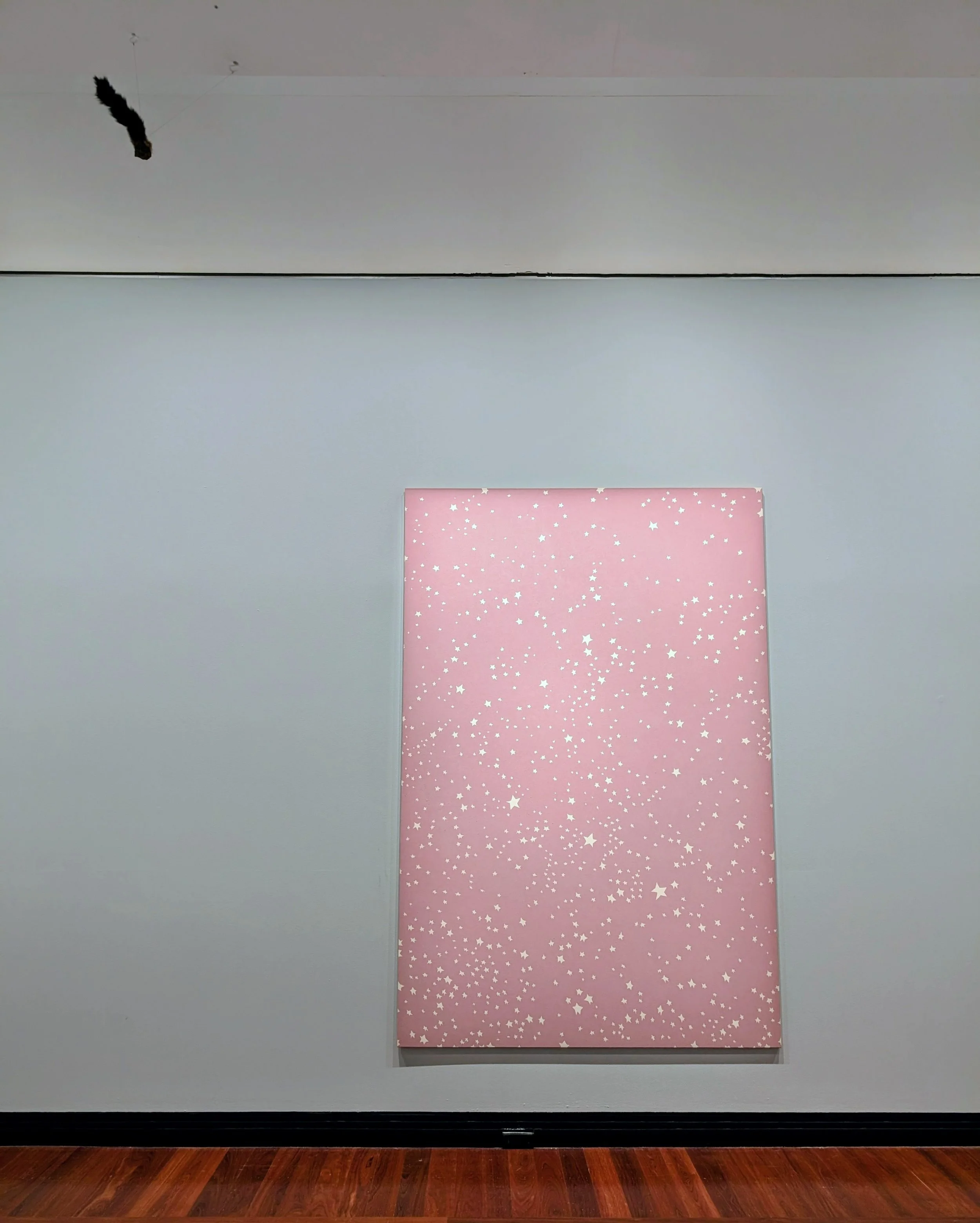
Matthew Harris
Baparra-banarrak
2022
meteorite, possum tail
Big Time
2025
ochre and acrylic binder on canvas
From the wall label: ‘When viewing Harris's works of art, audiences are confronted by the insignificance and the miraculousness of humanity, in the context of the scale and time of the universe. Distant future and deep time sit side by side in Matthew Harris's B/ Time and Baparra-banarrak. The painting depicting a constellation that will appear 65,000 years into the future hangs below a suspended meteorite aged around four-and- a-half billion years. Through his use of ochre for the sky and possum tail on the meteorite, Harris distinguishes his ever-present conception of time as specifically Aboriginal.’
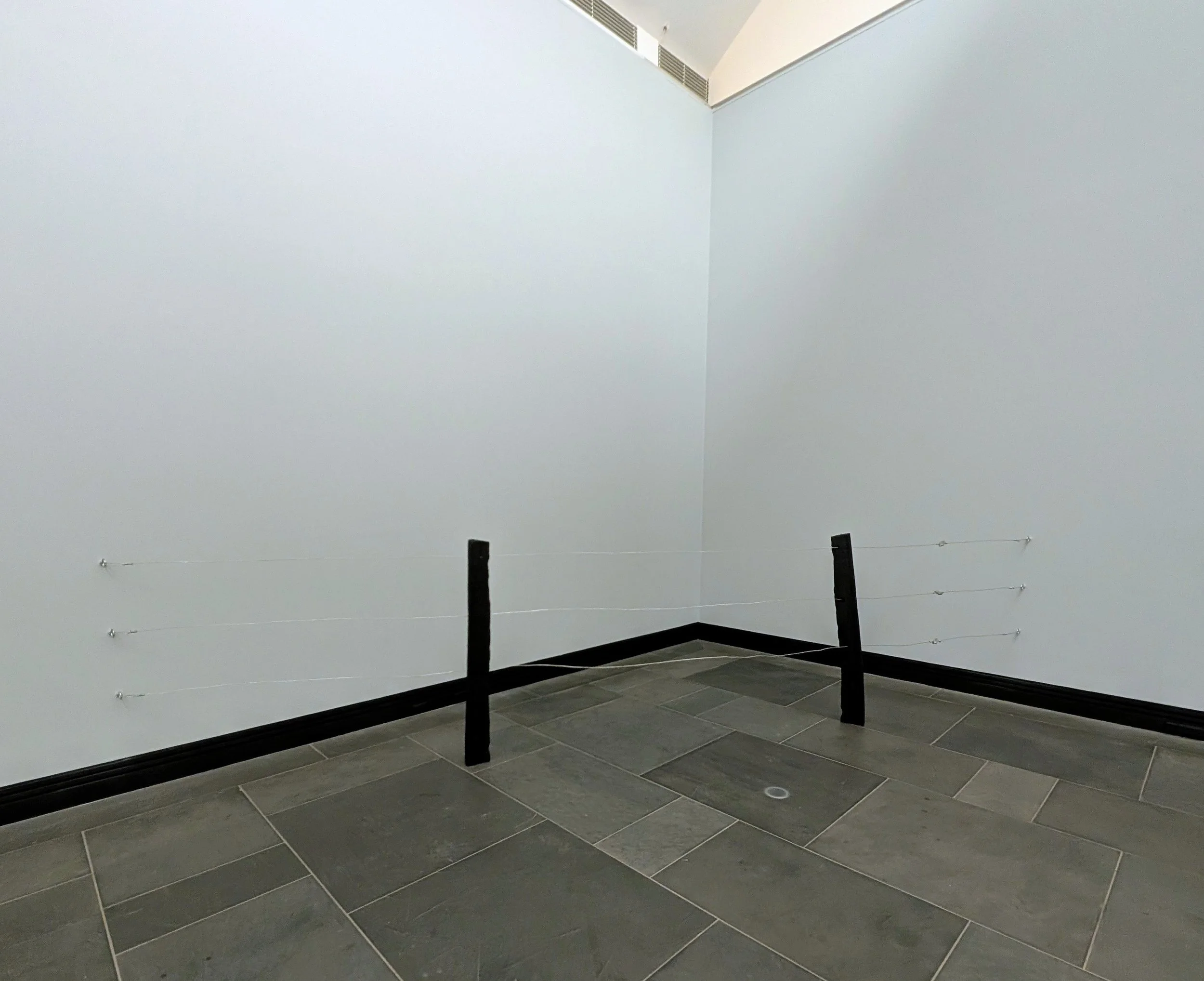
D Harding
breaking boundaries (fence)
2022
black pigmented industrial silicone rubber parts, galvanised agricultural fence fixings
From the wall label: ‘The violence of enclosure is the subject of d harding's breaking boundaries (fence). To create the work, the artist cast an agricultural fence post that had previously been used to divide harding's Bidjara ancestral land. Breaking boundaries (fence) is an act of doubling, with harding appropriating the act of appropriation: the wooden fence post, originally made to assert a definitive boundary, becomes a limp marker when cast in silicone.’