Art Gallery of NSW
Popped down to Sydney to see Avatar at the Art Gallery of NSW - an exhibition about the artistic and cultural legacy of Vishnu across time - well observed and deftly presented, with an unexpectedly seamless integration of works by living artists throughout. And then a leisurely stroll through most of the other galleries while the rain continued to pour down outside, only ceasing the moment I gave in and bought an umbrella from the gift shop.
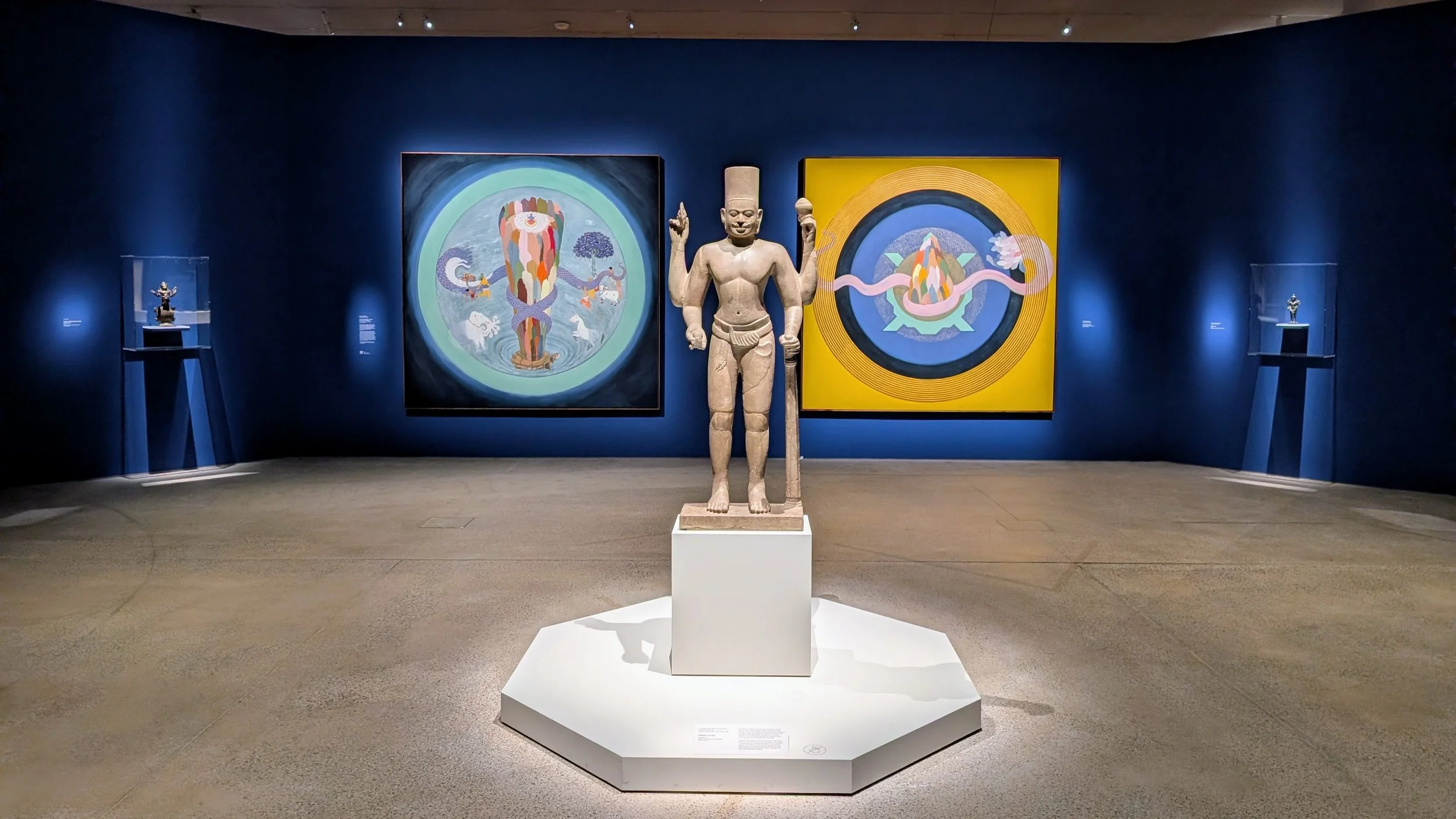
Install shot, Avatar: Forms of Vishnu
Angkor period sandstone sculpture of Vishnu (early 800s) in front and two paintings by Desmond Lazaro behind.
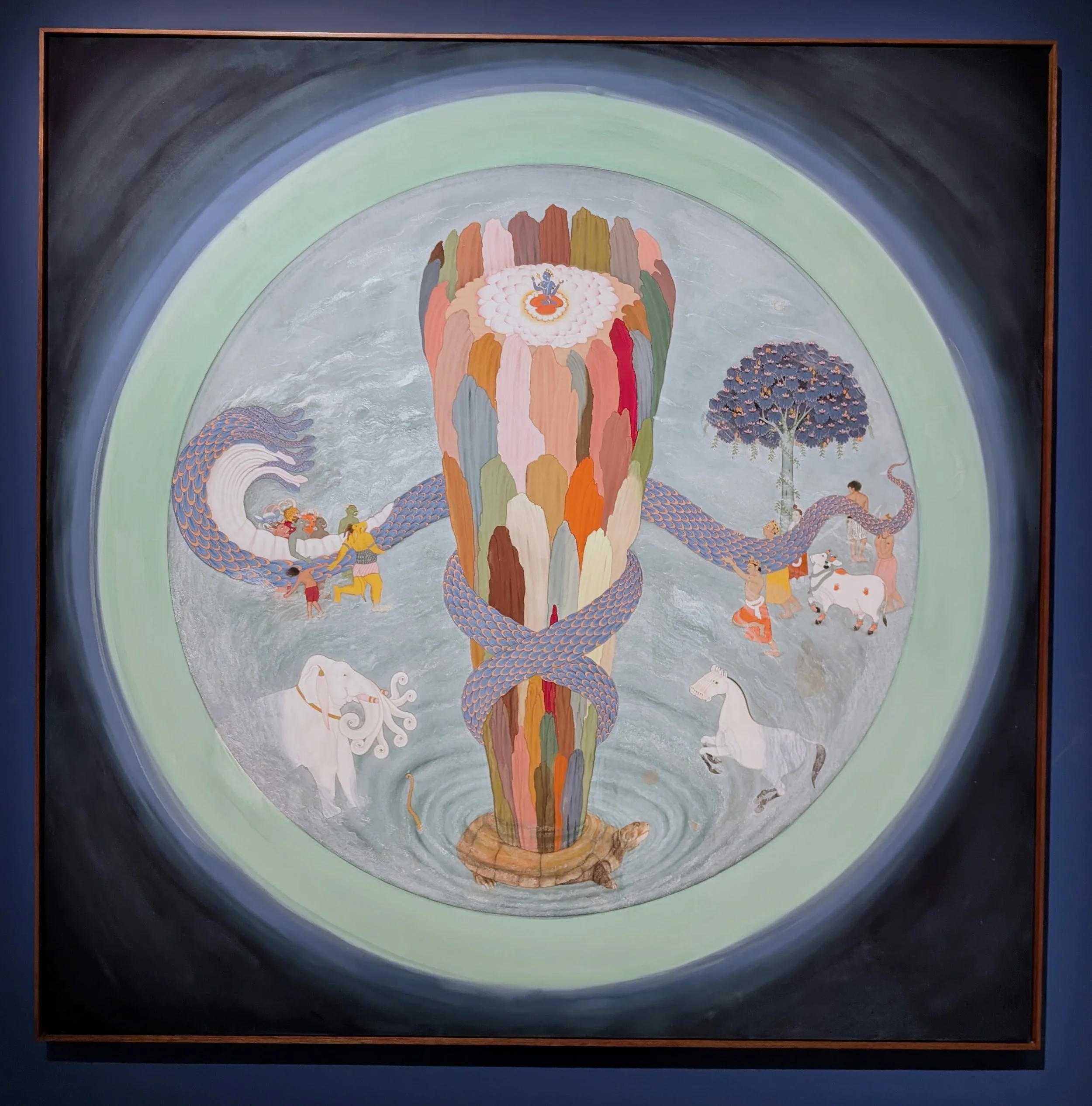
Desmond Lazaro
Samudra Manthana, Churning of the Ocean of Milk 2026
natural pigments and gold on birch board
“Made especially for this exhibition, Desmond Lazaro's paintings reinterpret the legend of the Churning of the Ocean of Milk in which Vishnu takes several forms at once. After a curse weakens the gods and causes the celestial treasures to sink into the ocean, Vishnu instructs them to work with the demons to retrieve the treasures, especially the amrita, the elixir of immortality.” - exhibition wall label
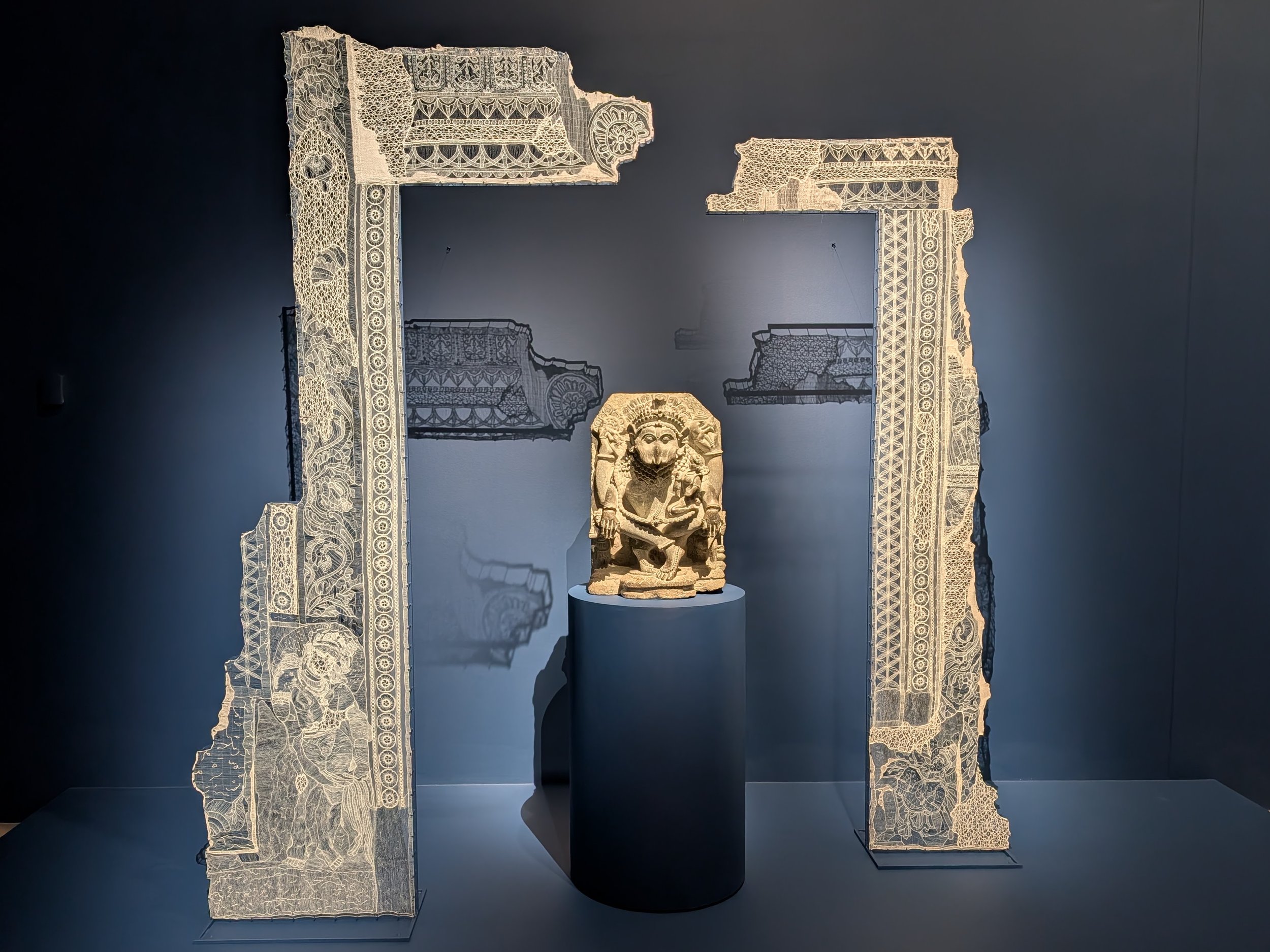
Sumakshi Singh
Threshold 2026
cotton and silk
“Like delicate veils drawn through space, Sumakshi Singh's lace installations create illusory environments exploring memory, displacement, absence and presence. Threshold was made to frame a 13th-century sculpture from Odisha depicting Vishnu's man-lion avatar Narasimha, who sits peacefully with his consort Lakshmi after vanquishing the demon Hiranyakashipu.
Singh was inspired by the architecture of the 13th-century Sun Temple at Konark in Odisha, as well as the legend of Narasimha, a liminal being who appears from a pillar that fractures as he emerges.” - exhibition wall label
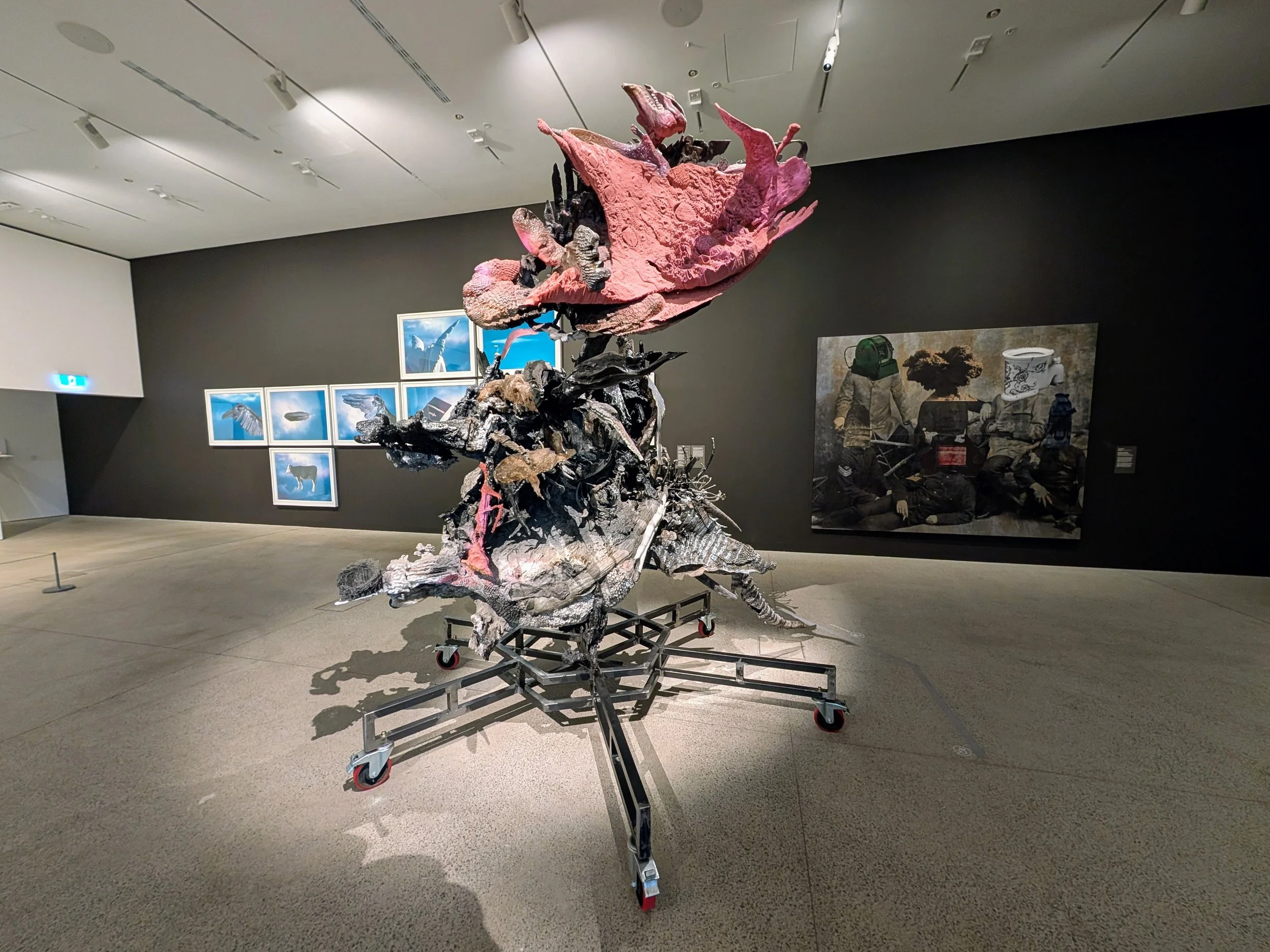
Adrián Villar Rojas
The End of Imagination IV 2022
layered composites of organic, inorganic, human and machine-made matter including metal, concrete, soil, plaster, wood, sand, marble dust, glass, salt, wax, resin, pigment, water, tree bark, adhesive, spray paint, salvaged auto parts, recycled plastic
“Adrián Villar Rojas creates collaboratively produced, site-specific works that speak to the unfolding of time and the futures of humanity. The End of Imagination IV is drawn from the artist's inaugural exhibition in this building's Nelson Meers Foundation Tank in 2022, in which he modelled sculptures and the worlds that created them.
To create this work, Villar Rojas used an amalgamation of software systems to generate a series of digital worlds in which he placed virtual sculptures. These various worlds considered major environmental and sociopolitical events over timespans ranging from hours to millennia. Over time, the virtual sculptures were scorched by fire, distorted by gravity, toppled by unrest, wounded by wars and overcome by extraterrestrial forces. These virtual sculptures were then pulled from time and space and reconstituted physically.” - exhibition wall label
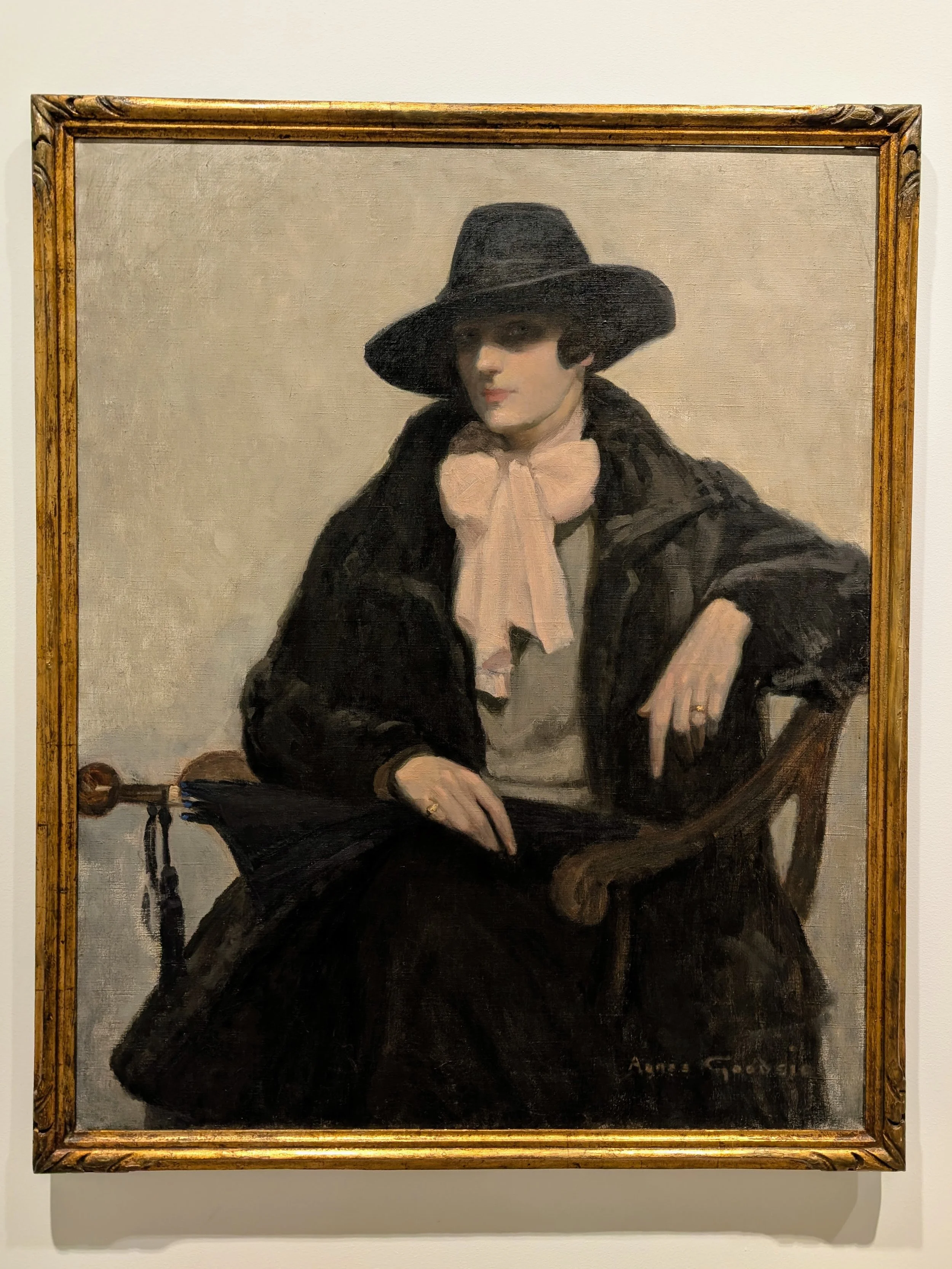
Agnes Goodsir
Type of the Latin Quarter c. 1926
oil on canvas
“Trained in Bendigo, Victoria, Agnes Goodsir based herself in Europe from 1900. By the early 1920s she was settled in Paris, where she exhibited in the salons and moved in bohemian circles centred around the city's Latin Quarter. In this portrait, the sitter's eyes are shadowed by a fedora, typically worn by men in the 1920s. It contrasts with the large pink bow around her neck, as if in challenge to fashion's gender codes. Although the title describes her as a 'type of the Latin Quarter', the sitter has been identified as Rachel (Cherry) Dunn, Goodsir's lifelong partner.” - wall label
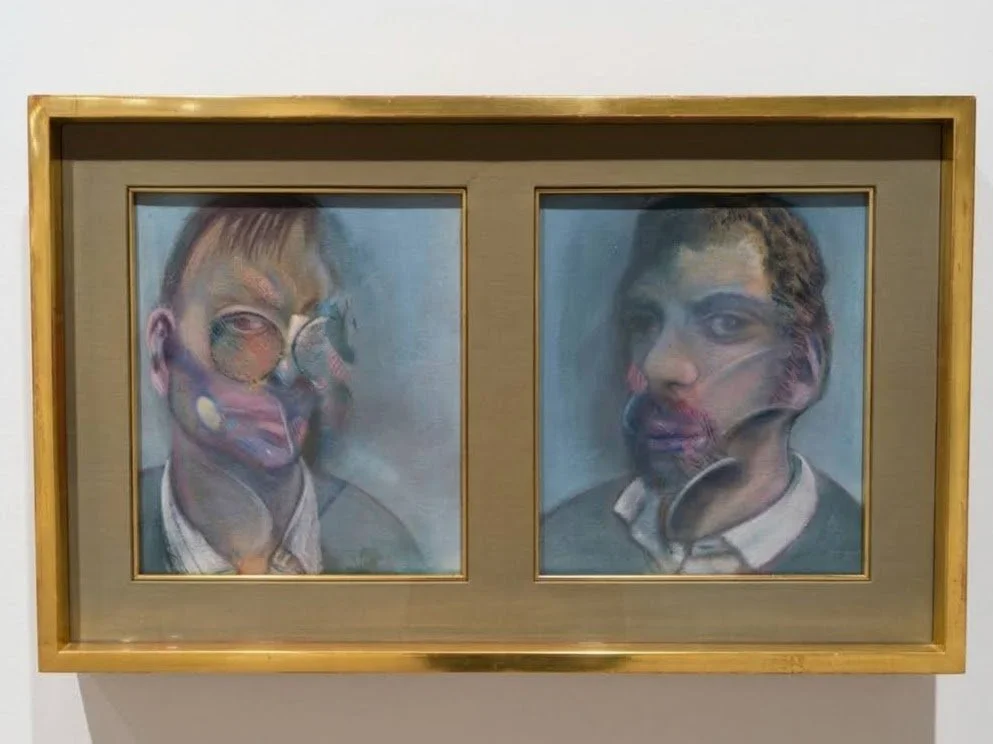
Francis Bacon
Study for portrait of Reinhard Hassert; Study for portrait of Eddy Batache 1979
oil on canvas, 2 panels
“The art historians Reinhard Hassert and Eddy Batache were Francis Bacon's close companions from the 1970s until his death. The pair, originally from Germany and Lebanon respectively, became prominent in the Sydney art world while Batache was a lecturer at the University of Sydney between 1965 to 1973. They befriended Bacon on their return to Paris, where the artist had an apartment.” - wall label
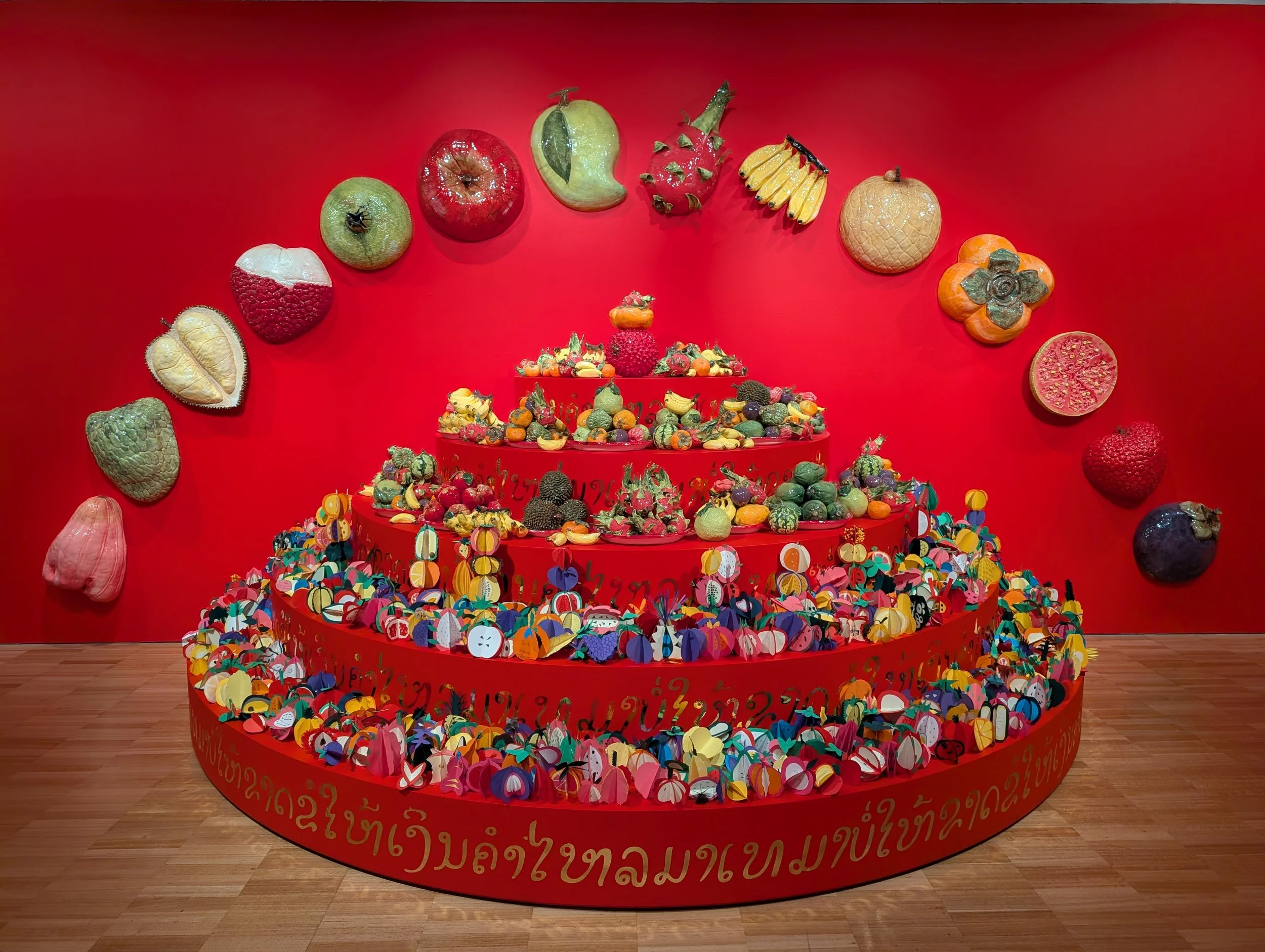
Michelle Bounpraseuth
ຂໍໃຫ້ເງິນຄຳໄຫລມາເທມາບໍ່ໃຫ້ຂາດ
Kho hai ngeun kham lai ma the ma bo hai khat
(Please, may money and gold flow and pour eternally without end) 2026
glazed earthenware
“To grieve is to love. Altars are spaces that honour grief with care and intention, holding gestures of gratitude and remembrance that sustain the memory of those who are gone yet remain with us. Each element reflects the ties between past and future. Fruit, like gold, embodies nourishment and abundance, a tangible offering carrying care, sustenance and hope across generations.
The blessing Kho hai ngeun kham lai ma the ma bo hai khat shares this purpose. It is a wish for money and gold to flow without end and a hope for safety, ease and care to extend through the years. In Lao culture, gold is more then wealth. It represents protection, aspiration and the possibility of dreams, especially for lives shaped by displacement, uncertainty and the labour of migration. When spoken by elders to younger kin, the blessing conveys love and the wish that the next generation may face fewer hardships than those that came before.
Grief and memory fold into the blessing, carrying care and hope into the heart. To be remembered is to be loved.” - Michelle Bounprasauth (wall label)